
The journal · 30 June 2026
A realistic wedding day photography timeline
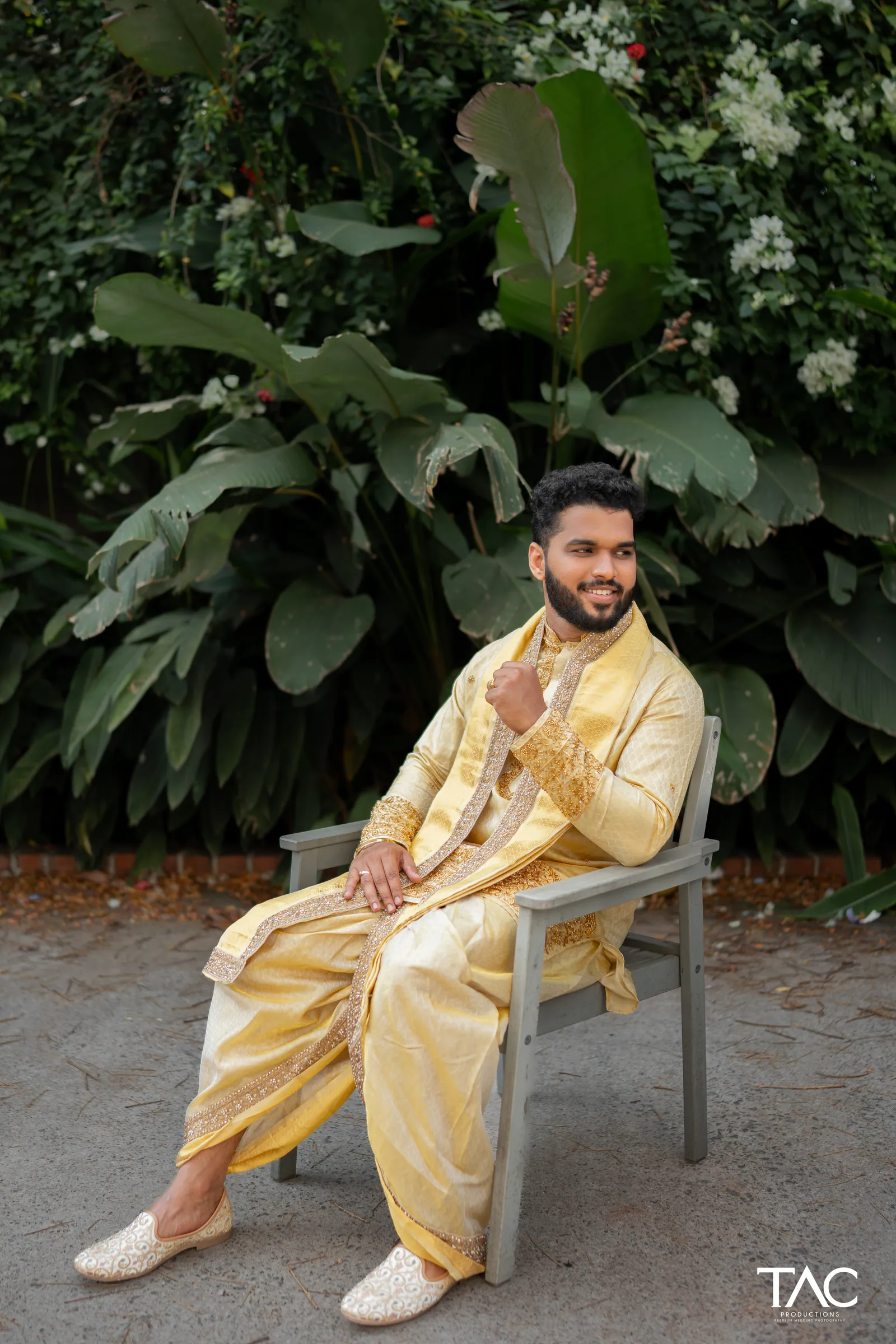
A wedding photography timeline built on guesswork falls apart by noon. The one that holds up is built backward from your most important light — usually golden hour — and accounts for the fact that every ritual runs ten minutes longer than planned.
Here is the structure we actually use, adjusted to your specific rituals.
Start with getting-ready coverage
We arrive while hair and makeup are still underway, roughly two hours before the first ritual. This window gives us the quiet, unposed images families treasure later — a mother adjusting jewellery, nervous hands, the dress or saree laid out before it’s worn. Build in more time here than feels necessary; getting-ready almost always overruns.
Protect the muhurtha window
If your ceremony includes a specific auspicious time, that window is non-negotiable and everything else in the day should bend around it, not the reverse. We ask for the muhurtha time before we plan anything else, then work outward from it — arrival, rituals leading up to it, and the moments immediately after.
Build in a real portrait session
Couple portraits need fifteen to twenty uninterrupted minutes, ideally during the best light of the day rather than squeezed in whenever there’s a gap. For a coastal wedding, that often means stepping onto the beach in the last hour before sunset — a slot worth protecting on the schedule days in advance, because it does not survive being an afterthought.
Family portraits are a separate block. Budget one to two minutes per grouping and have a coordinator ready with a list — this is the single biggest place wedding timelines slip.
Plan the gaps, not just the events
The transitions between rituals — changing outfits, moving between venue spaces, waiting for the next auspicious moment — are where a timeline either holds or collapses. We build fifteen-minute buffers around every major transition, which is often the difference between an unhurried gallery and a rushed one.
An example timeline, adjusted for a beach or resort wedding
- 2:00pm — getting ready coverage begins
- 3:30pm — groom’s arrival, baraat or procession if applicable
- 4:00pm — main ceremony begins, muhurtha protected
- 5:30pm — family portraits
- 6:00pm — couple portrait session, golden hour
- 7:00pm — reception begins
This shifts earlier or later depending on season and location — a monsoon wedding needs a different light plan than a dry-season one, and a Bangalore reception hall runs on a different clock than a Kundapura beach resort.
Where a filmmaker changes the plan
If you’re booking both photography and film, the timeline needs a shared plan between the two teams so neither is working against the other for the same frame — more on that in our guide to booking both.
Building your timeline with us
We build a timeline with every couple before the wedding, based on their specific rituals, venue, and season — not a generic template. See how this plays out across real weddings in our portfolio, or check common questions in our FAQ.
If you have a date and a rough sense of your rituals, get in touch and we’ll help you build a timeline that survives contact with the actual day.
— The Artsy Craftsmen